Ultralight Backpacking vs Comfort: What Actually Works After 40
Introduction
Ultralight backpacking dominates the conversation today—but is it actually the best approach for hikers over 40?
If you’ve ever tried to follow ultralight advice and ended up uncomfortable, exhausted, or unable to sleep, you’re not alone.
In this post, we break down the real trade-offs between ultralight backpacking vs comfort and show you how to find the right balance for your body, your goals, and your experience level.
🎧 Listen to the Episode
The Backpacking Triangle: Weight, Comfort, Mileage
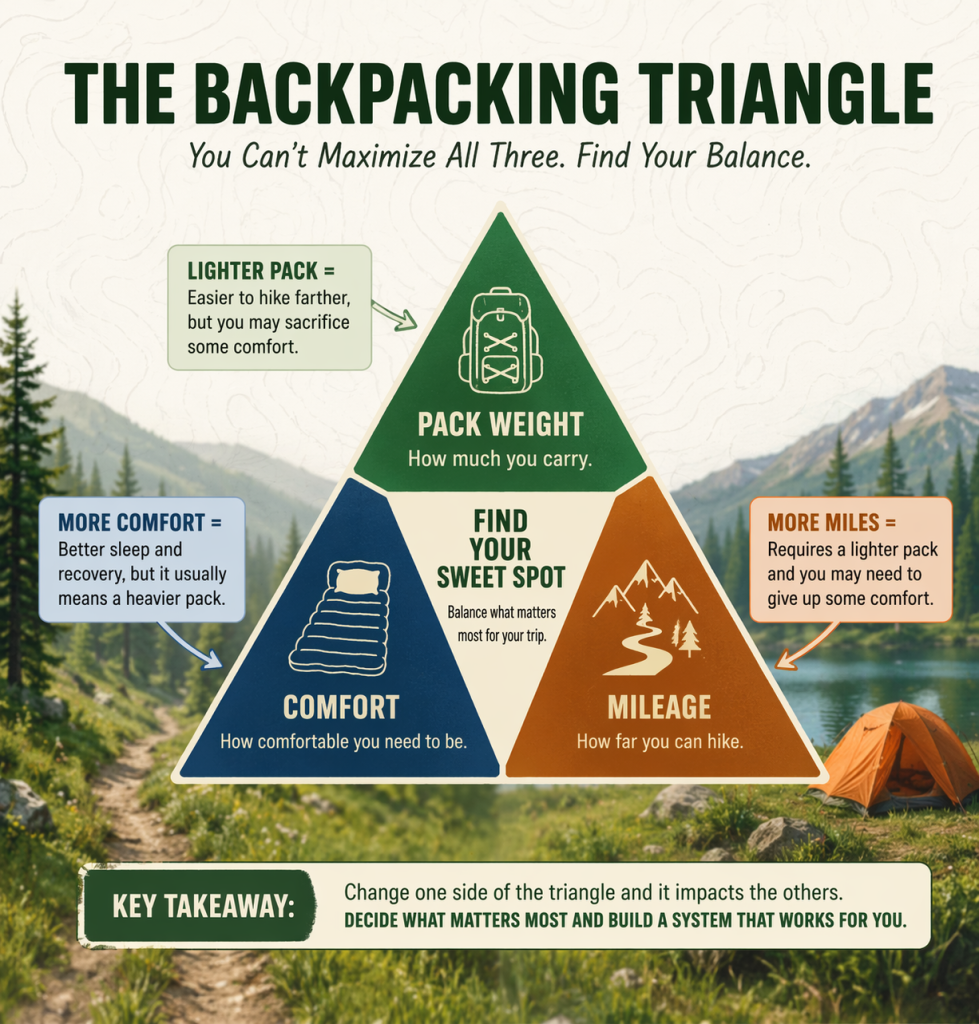
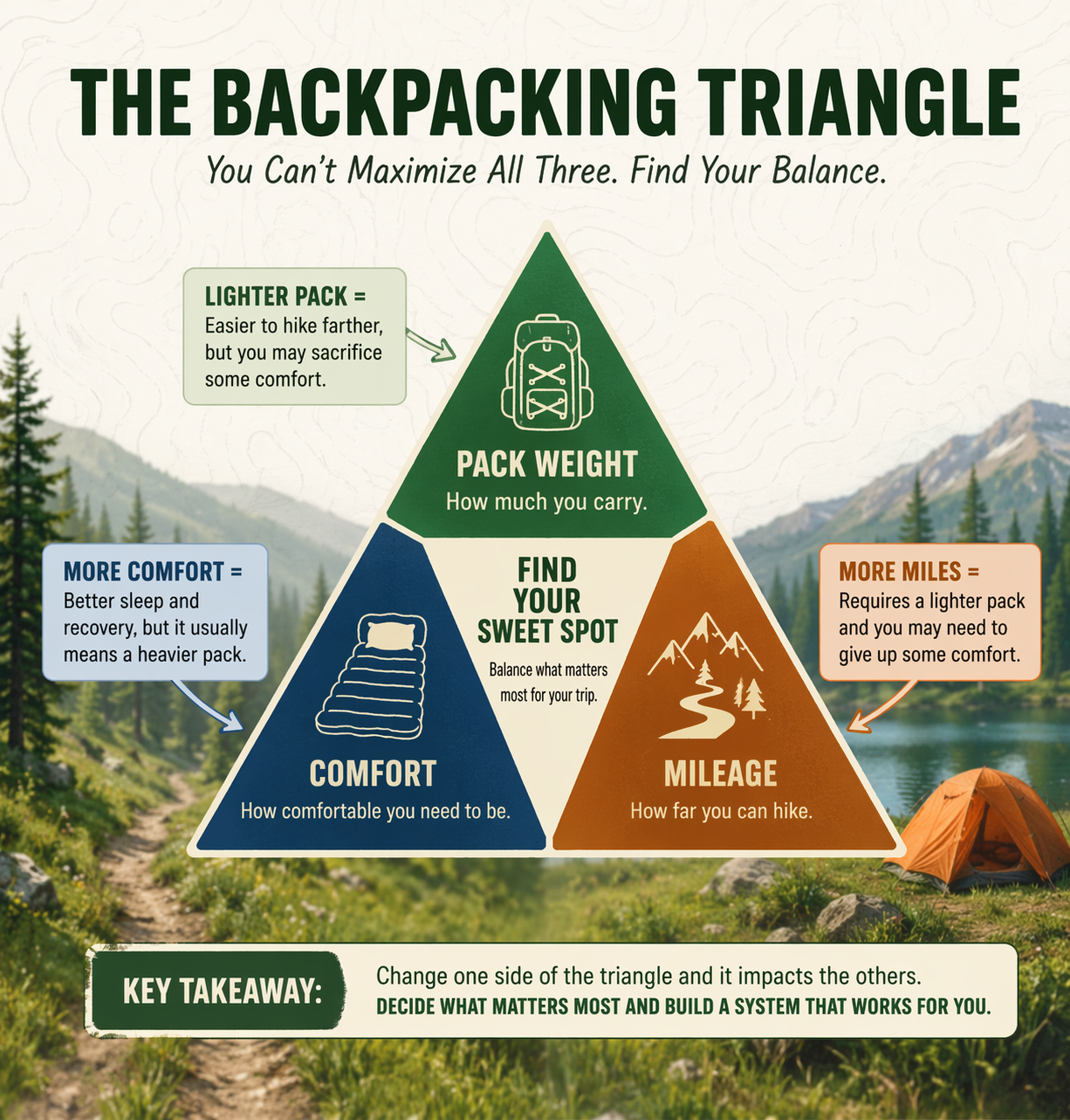
One of the most important concepts to understand is what we call the backpacking triangle:
- Pack weight
- Comfort
- Mileage
You can’t maximize all three at once.
If you go ultralight, you sacrifice comfort.
If you prioritize comfort, you carry more weight.
If you want big miles, weight becomes critical.
The key is deciding what matters most for your trip. Shorter trips can allow a heavier pack, while multi-day or long-distance trips require more attention to packing extra items for comfort.
Why Sleep Matters More After 40
As you get older, recovery becomes one of the most important parts of your backpacking experience.
And recovery starts with sleep.
Key factors that matter:
- Sleeping pad thickness
- Pad width and length
- Sleep position (side, back, stomach)
- Quilt vs sleeping bag
- Pillow support
If you’re a side sleeper, especially over 40, a thin ultralight pad simply isn’t going to cut it.
A 3–4 inch thick sleeping pad is often the difference between:
- Sleeping all night
- Or staring at your tent ceiling at 2 AM
Building a Sleep System That Actually Works
Your sleep system is where comfort matters most.
From the episode :
- Thicker pads = better pressure relief
- Wider pads = more mobility as you sleep (tossing and turning)
- Quilts = better for movement and comfort
- Pillows = not optional as you age
Yes, it adds weight.
But better sleep = better hiking experience.
Shelter Choices: Space vs Weight
Ultralight shelters prioritize minimal weight.
But that comes with trade-offs:
- Less room
- More condensation (single-wall tents)
- Less forgiveness for movement
Better options for comfort:
- 2-person tent (even solo)
- Double-wall design
- More interior space
A few extra ounces can make a big difference in how you sleep and relax at camp.
Comfort Gear That’s Worth the Weight
Some gear is debated heavily—but for many hikers over 40, it’s worth it.
Camp Shoes
- Relieves foot pressure
- Helps with recovery
- Improves camp comfort
Camp Chairs
- Great for social hikers
- Provides back support
- Worth it depending on your style
The key is not what’s “ultralight approved”—it’s what works for you.
Small Comfort Upgrades That Make a Big Difference
From the episode:
- Microfiber washcloth
- Light towel
- Small soap (like Dr. Bronner’s)
- Travel deodorant
These items:
- Improve comfort
- Improve hygiene
- Improve overall experience
Especially in humid environments like the Southeast.
The Reality: It’s All About Balance
Most ultralight setups aim for minimal weight.
But in real-world conditions—especially for hikers over 40—comfort matters.
From the episode :
- Ultralight sleep systems: ~2 lbs
- Comfort-focused systems: ~4–4.5 lbs
That extra weight can dramatically improve:
- Sleep quality
- Recovery
- Enjoyment
Final Thoughts: Build Your Own System
There’s no single “right way” to backpack. A lot of social media conversation suggests there is a choice between ultralight and misery; however, as you age, the question becomes more about what is in your pack and how it helps you backpack, rather than the grams each piece costs you in weight alone. The tradeoffs become more important.
Ultralight is a tool—not a rule.
The goal is simple:
Find the balance between weight, comfort, and mileage that works for YOU.