Backpacking First Aid Kit Checklist
Affiliate Disclosure
This gear review contains affiliate links. As an Amazon Associate, we may earn from qualifying purchases at no additional cost to you. We only discuss gear that we have used, tested, or believe is relevant to backpackers and hikers.
Lightweight, Practical, and Built for Real Use
Most backpackers carry too much first aid gear.
This guide breaks down what you actually need—based on real trail experience—not fear.
This post is a companion to Episode 4 of the Second Act Backpacking Podcast.
The Goal: Simple, Not Overbuilt
Your first aid kit isn’t there to handle every possible emergency.
It’s there to:
- Prevent small issues from getting worse
- Manage common problems
- Help you get off the trail safely if needed
If you understand that, your kit gets lighter—and more effective.
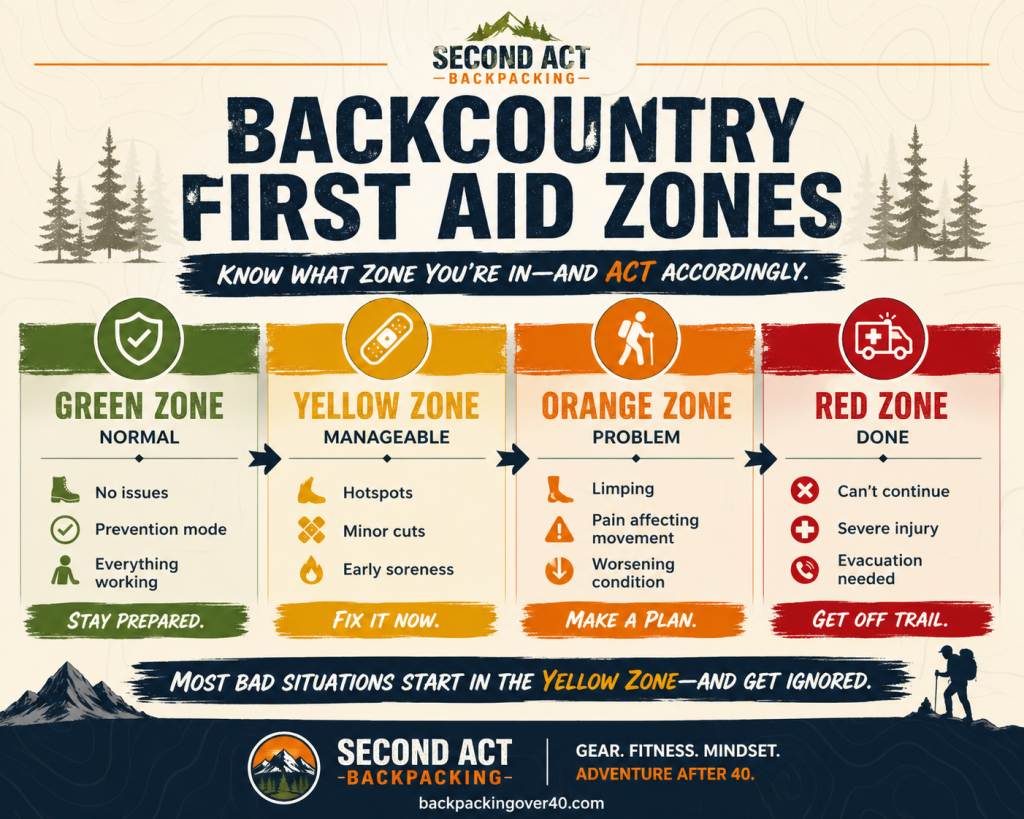
The Backcountry First Aid Zones
Most problems start small—and get ignored.
Our infographic is here to help you understand your kit and what it’s here for.
Know what zone you’re in—and act accordingly.
The Core Backpacking First Aid Kit
This is the exact type of kit most hikers actually need.
Wound & Blister Care
Leukotape (wrapped on a pencil)
- Best solution for hotspots and blisters
- Sticks better than moleskin
👉 Check Pricing on Amazon
4×4 Gauze Pads (2–3)
- Cut to size for wounds
Single Use Swabs (Iodine, BZK)
- Clean wounds without harsh burning
👉 Check Pricing on Amazon
Antibiotic Ointment Packets
- Prevent infection
👉 Check Pricing on Amazon
Steri-Strips
- Close small to medium wounds
👉 Check Pricing on Amazon
💊 Medications
Ibuprofen
- Inflammation and soreness
Acetaminophen (Tylenol)
- Pain and fever
Benadryl
- Allergic reactions, bug bites
Imodium
- GI issues on the trail
Tums
- Simple stomach relief
🧰 Small Tools
Tweezers (Don’t Skip This)
- Splinters, thorns, ticks
Mini Scissors or Multitool
- Cut tape and gauze
🧻 Multi-Use Items
Small Cloth / Bandana Section
- Cleaning wounds
- Compress for burns
- General use
⚠️ Advanced (Training Required)
Only carry these if you’ve been trained:
- Tourniquet
- Compression bandage
- Hemostatic gauze
What You Don’t Need to Carry
Most beginner kits are overloaded with:
- Large trauma kits
- SAM splints
- Full burn kits
- Suture kits
- Full-size bottles of anything
If you need that level of care…
👉 You need to get off trail.
How to Pack Your Kit
- Use a small zip pouch or dry bag
- Keep it organized and accessible
- Separate meds into a small container
👉 Goal: Everything fits in one compact kit
Want the Full Breakdown?
We walk through how to use this kit and when to make decisions on the trail in Episode 4.
Get Proper First Aid Training
Your gear matters—but your knowledge matters more.
If you spend time in the backcountry, taking a basic First Aid and CPR course is one of the best things you can do.
A great place to start is the American Red Cross.
👉 https://www.redcross.org/take-a-class/first-aid
FINAL THOUGHT
You don’t need more gear.
You need:
- Awareness
- Good decisions
- And the ability to act early
One Comment