Backpacking First aid for beginners and those over 40 EP4 What you actually need to know
About this episode
Getting your first aid kit dialed in is one of the most important parts of preparing for your first shakedown hike. But most people overpack it.
In this episode, we break down what actually matters, what doesn’t, and how to think about first aid in the backcountry using our “First Aid Zones.”
Why First Aid Is Different in the Backcountry
First aid on the trail is not the same as first aid at home.
When you’re miles from the trailhead, time, distance, and environment all become part of the equation. The goal is not to treat everything—it’s to stabilize, make smart decisions, and get yourself to safety if needed.
This episode is part of our Shakedown Series, where we help you build confidence before your first overnight trip.
Key Takeaways from Episode 4
- Most backpackers overpack their first aid kit
- The most common injuries are:
- Blisters
- Minor cuts and scrapes
- Minor burns
- First aid is about prevention first, treatment second
- Your kit should help you:
- Stay comfortable
- Manage small issues
- Get off the trail safely if needed
- You are not trying to “fix everything” in the backcountry
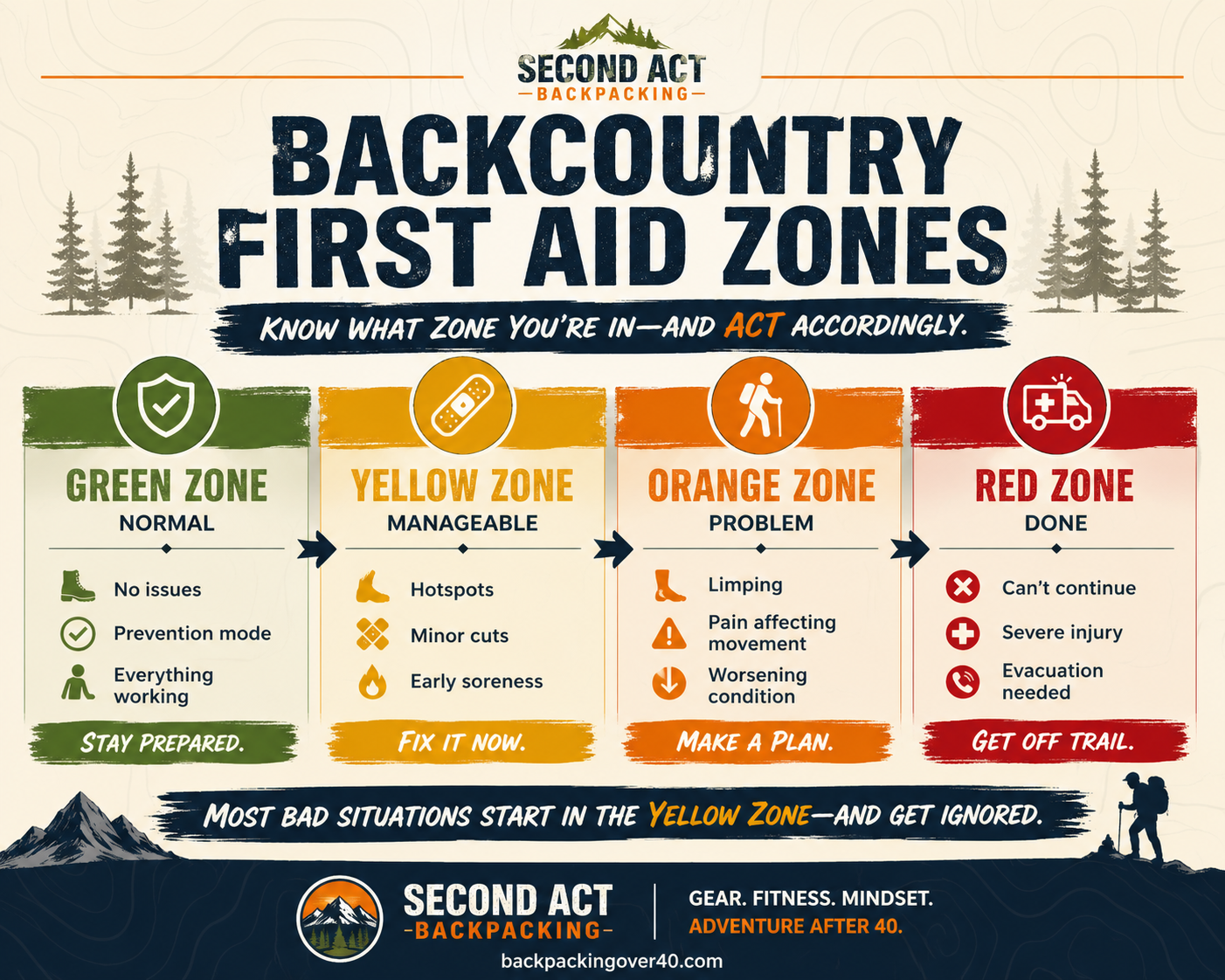
The Backcountry First Aid Zones
Understanding first aid in the backcountry isn’t about carrying more gear—it’s about recognizing what situation you’re in and responding appropriately.
We break this down into four simple zones:
🟢 Green Zone — Normal
You feel good. No issues.
This is where your focus should be on prevention:
- Proper footwear
- Staying aware of your body
- Taking breaks and keeping a pace that’s right for you.
- Making smart decisions early in the trip and throughout.
🟡 Yellow Zone — Manageable
This is where most problems begin.
- Hotspots on your feet show up during your first few miles.
- Minor cuts or scrapes from overgrown trails or slips and trips.
- General soreness after time with your pack and steep ups and downs.
These are easy to fix—if you act early and will likely not get worse or even improve.
🟠 Orange Zone — Problem
Now you’re dealing with something that affects your ability to hike.
- Limping due to blisters, sore feet, or muscles.
- Increasing pain from muscle soreness, inflammation, and/or swelling.
- Conditions are getting worse, like cuts or scrapes showing signs of delayed healing or infection
At this point, you need to make a plan, and you have three options.
Slow down and adjust, take a zero day to rest on the trail, or prepare to exit the trail.
🔴 Red Zone — Done
This is where the trip is over.
- You can’t continue safely
- Severe injury
- You may need help or evacuation
Your only goal here is to get off the trail safely.
Final Thought
Most serious backcountry problems don’t start in the Red Zone.
They start in the Yellow Zone—and get ignored.
Know what zone you’re in—and act accordingly.
What You Actually Need in a Backpacking First Aid Kit
For most trips, your kit should focus on the basics:
🩹 Wound & Blister Care
- Tape (like Leukotape)
- Gauze pads (4×4 pads, 3×3 pads)
- Antiseptic wipes (bzk, iodine, alcohol)
- Antibiotic ointment
- Steri-strips as needed
💊 Medications
- Ibuprofen (inflammation/pain)
- Acetaminophen (pain/fever)
- Benadryl (allergic reactions)
- Imodium (GI issues)
- Antacids (Tums)
🧰 Tools
- Tweezers (for splinters/ticks)
- Small scissors or multitool for cutting tape, making bandages or dealing with blisters
🧻 Multi-Use Items
- Small cloth or bandana piece (cleaning/compress)
The Biggest Mistake: Packing Your Fears
Many hikers fall into the trap of packing for every possible scenario.
“What if I need this?”
“What if that happens?”
Before long, your pack is heavier than it needs to be—and your trip suffers because of it.
The reality is:
- Serious injuries require rescue or evacuation
- Your job is to stabilize and make good decisions until help can arrive or your condition improves
When It’s Time to Get Off Trail
Knowing when to stop is one of the most important skills you can develop.
You should consider ending your trip if:
- You cannot safely continue walking due to blisters, strains, or sprains.
- Pain is worsening, not improving
- Bleeding won’t stop
- You have signs of infection
- You experience moderate to severe burns
- You have a head injury with confusion or dizziness
👉 Your first aid kit is not there to keep you on trail—it’s there to help you get off trail safely.
Check out our tips and tricks article about the basics of a first aid kit HERE.
First Aid Starts Before You Leave
The best first aid kit is the one you rarely need.
Most issues can be prevented with:
- Proper footwear (blisters)
- Taking breaks on a regular schedule
- Smart camp setup (burns), testing your equipment, and knowing how to use it.
- Trekking poles (falls)
- Proper loading and carrying of your pack (prevents falls with better balance)
- Good hydration and nutrition throughout your trip. (Drink and eat often)
If your first aid kit is working hard, something earlier in your system likely failed.
Get Proper First Aid Training
Everything we’ve covered here is meant to help you handle common, real-world situations on the trail—but nothing replaces proper training.
If you’re serious about spending time in the backcountry, taking a basic First Aid and CPR course is one of the best investments you can make. It builds confidence, improves decision-making under stress, and equips you to respond effectively when something goes wrong.
A great place to start is the American Red Cross, which offers widely recognized First Aid and CPR certification courses, both in-person and online.
👉 You can learn more or find a class near you here:
https://www.redcross.org/take-a-class/first-aid
🎧 Listen to Episode 4
If you’re getting into backpacking later in life—or getting back into it—we’re building this podcast for you.
New episodes every week
Practical advice, no fluff